Cummins Invests $50 Million in Daventry: What It Means for UK Manufacturing
When a Fortune 500 company puts $50 million into UK manufacturing, it sends a clear signal about faith in British industry. Cummins Inc., the American power technology giant, announced this major UK manufacturing investment in its Daventry plant in Northamptonshire. The news came at the UK Government's first Regional Investment Summit in October 2025.
When a Fortune 500 company puts $50 million into UK manufacturing, it sends a clear signal about faith in British industry. Cummins Inc., the American power technology giant, announced this major UK manufacturing investment in its Daventry plant in Northamptonshire. The news came at the UK Government’s first Regional Investment Summit in October 2025.
This investment is not a one-off gesture. It forms part of a wider $200 million push to grow Cummins’ UK manufacturing capacity. For manufacturing directors, operations managers, and supply chain professionals, this raises key questions: what drives major firms to double down on UK manufacturing investment, and what chances does this create for British industry?
The Daventry Investment in Detail
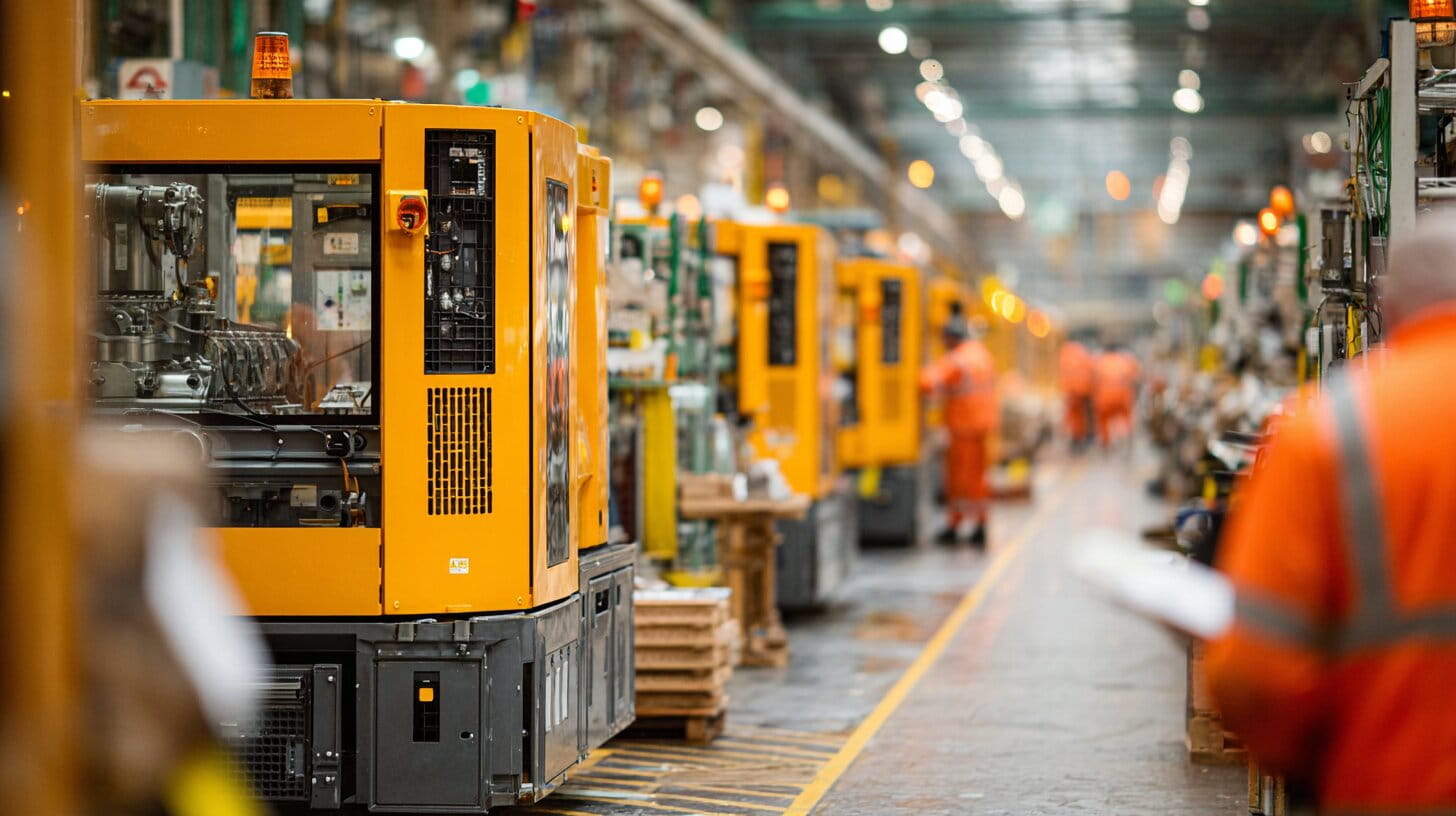
Cummins’ 435,000 square foot Daventry site has been central to the company’s UK operations for over 50 years. The facility designs, builds, and ships high-horsepower engines and power systems. These serve sectors including data centres, healthcare, rail, marine, and oil and gas.
Infrastructure Upgrades
The $50 million UK manufacturing investment will deliver specific upgrades:
- A new 315 square metre assembly line facility
- Three new machining centres and a block wash system
- Refurbished test cell capacity to meet growing global demand
Jenny Bush, President of Cummins Power Systems, framed the investment in terms of both workforce and strategy: “This investment reflects the dedication of our Daventry workforce, who continue to deliver world-class power solutions to customers around the world. It ensures our site remains at the forefront of innovation, sustainability, and advanced manufacturing.”
The Daventry operation now employs over 1,100 people. This makes Cummins one of the largest industrial employers in West Northamptonshire. The investment should secure these skilled jobs while boosting local supply chains.
Why Now? The Data Centre Power Boom
The timing of Cummins’ investment is no accident. The company reported record sales and profits in its Distribution and Power Systems segments for 2025. CEO Jennifer Rumsey cited “robust demand for data center backup power” as a key driver.
UK Digital Infrastructure Growth
The UK is seeing rapid growth in digital infrastructure. Oxford Economics research from December 2025 shows the country had 266 data centres in 2024, up from just 52 at the turn of the millennium. More than $59 billion in new data centre builds has been announced since 2023. Around 50 new facilities should come online within five years.
The power needs are huge. The National Energy System Operator says data centres used 5.0 TWh of electricity in 2023—about 2% of total UK demand. Oxford Economics thinks this could grow fivefold by 2030, reaching 26.2 TWh and nearly 9% of UK electricity use.
Every data centre needs reliable backup power. When the grid fails, hospitals, financial systems, and telecom networks cannot simply go dark. This is where power systems manufacturing becomes vital infrastructure.
The Government’s AI Opportunities Action Plan, launched in January 2025, outlined 50 steps to make the UK an “AI superpower.” The AI Growth Zones scheme aims to speed up AI infrastructure by cutting red tape. All of this creates demand for the power generation equipment made at Daventry.
UK Manufacturing Investment: Defying the Pessimists
The Cummins investment arrives amid improving UK manufacturing sentiment. The S&P Global Manufacturing PMI hit 51.8 in January 2026—the highest reading in 17 months and the fourth straight month of growth. Export orders rose for the first time in four years, driven by demand from the US, China, and Europe.
Sector Performance Data
Make UK’s annual report ranked the UK 11th in global manufacturing, with output worth $279 billion. The sector employs 2.6 million people earning wages 8% above the national average. Average manufacturing wages rose nearly 7% year-on-year.
The Grant Thornton Manufacturing Growth Index found that the UK’s 200 fastest-growing private manufacturers made £8.4 billion in revenue with 45% EBITDA growth over two years. These firms doubled profits despite energy costs, supply chain issues, and global uncertainty.
The Cummins investment fits this pattern. Power systems manufacturing sits at the crossroads of several growth trends: electrification, digitalisation, critical infrastructure, and the energy transition. Firms in these spaces are beating the broader sector. Meanwhile, skills shortages remain a key challenge that the government is working to address through apprenticeship reforms.
The Regional Dimension
The Regional Investment Summit where Cummins announced its UK manufacturing investment showed a clear government plan to spread growth beyond London and the Southeast. Chancellor Rachel Reeves said the event was “delivering what we promised in our Plan for Change, with nearly a thousand jobs and over £10 billion in investment that will flow directly into communities across Britain.”
West Northamptonshire’s Advantages
For West Northamptonshire, the Cummins investment cements Daventry’s role as a manufacturing hub. The region offers good motorway links, an established industrial skills base, and closeness to major markets.
The knock-on effects go beyond direct jobs. Power generation gear needs precision machining, electronic parts, control systems, and specialist engineering services. Local suppliers gain from being near a major OEM customer. The presence of a global manufacturer attracts related businesses and talent.
Sustainability as Competitive Advantage
Cummins’ Daventry investment includes a green dimension that reflects wider industry trends. In 2023, the company spent £2.9 million on a 20,000 square metre on-site solar farm. It can generate 1.8 megawatts of renewable energy—enough to power 746 homes each year.
Environmental Progress
The site had already cut emissions by 30% before the solar farm went live. This forms part of Cummins’ “Destination Zero” strategy and broader PLANET 2050 environmental plan.
For manufacturing directors weighing capital spending, the Cummins approach shows how sustainability investments can boost efficiency. On-site generation cuts exposure to volatile grid electricity prices. Strong environmental credentials help win customers, especially in the public sector and with multinationals that have their own green commitments.
What This Means for UK Supply Chains
Manufacturers wanting to understand what the Cummins investment means for their own firms should think about several angles.
Direct Supply Chain Opportunities
Cummins’ growth in UK manufacturing capacity creates demand for parts, materials, and services from British suppliers. Firms with skills in precision machining, electrical systems, testing gear, or industrial services should check if they can meet Cummins’ supplier needs.
Parallel Market Opportunities
The factors driving Cummins’ investment—data centre growth and critical infrastructure demand—create chances for other UK manufacturers. Power distribution kit, cooling systems, security hardware, and fire suppression systems all serve the same end markets.
Skills Development
Power systems manufacturing needs mechanical engineering, electrical expertise, testing and quality skills, and increasingly digital skills for connected equipment. Firms competing for similar talent should invest in training programmes.
Regional Clustering
The concentration of power generation expertise in the East Midlands creates scope for team approaches to skills development, supply chain coordination, and export promotion.
The Foreign Investment Question
The Cummins investment raises the age-old question about foreign ownership in UK manufacturing. Some see inward investment as a strength, showing global confidence in British skills. Others worry about strategic dependencies and decisions made in overseas boardrooms.
A Pragmatic View
The practical view is that foreign direct investment brings real benefits: jobs, skills growth, technology transfer, and links to global value chains. The EY 2025 UK Attractiveness Survey found that the UK secured 853 FDI projects in 2024, staying second in Europe despite a 13% year-on-year drop. This stands in contrast to recent closures in other sectors that highlight the importance of sustained investment.
What matters is whether foreign-owned operations become embedded in local ecosystems. Cummins’ 50-year presence in Daventry, its investment in on-site green infrastructure, and its ties to local supply chains suggest genuine commitment rather than short-term capital seeking quick returns.
Looking Ahead
Cummins’ 2026 outlook projects revenue growth of 3% to 8%, with continued strength in data centre power markets. CEO Jennifer Rumsey cited “robust demand for data center backup power” as a key driver.
Broader Implications
For UK manufacturing investment trends, the implications go beyond one company’s decision. The structural drivers—AI adoption, data centre growth, electrification, and critical infrastructure—are likely to persist for years. Manufacturers serving these markets can expect steady demand.
The Daventry investment also shows that UK manufacturing still attracts sophisticated global investors. Despite worries about energy costs, skills shortages, and post-Brexit trade friction, major multinationals continue to see value in British manufacturing.
The challenge for UK manufacturing more broadly is making sure these positive examples lead to wider sector gains. The PMI data suggests conditions are improving, but recovery remains uneven. Large manufacturers with strong market positions are doing better than SMEs still facing cost pressures.
For manufacturing leaders, the Cummins investment offers both hope and a strategic blueprint. Firms that place themselves at the crossroads of growth trends, invest in sustainability, and embed themselves in local ecosystems are finding ways to thrive.
The $50 million commitment to Daventry is a vote of confidence in UK manufacturing investment. The question for other manufacturers is whether they can seize similar chances in their own sectors and regions.
Key Takeaways for Manufacturing Leaders
-
Data centre demand is real and growing. Oxford Economics forecasts UK data centre electricity use could grow fivefold by 2030. Power systems manufacturing should expect steady demand.
-
Regional investment is a policy priority. The Government’s Regional Investment Summit signals intent to spread growth beyond London. Manufacturers in areas like the East Midlands should engage with local development bodies.
-
Sustainability drives competitiveness. On-site generation, emissions cuts, and environmental credentials are increasingly must-haves for major customer relationships.
-
Supply chain opportunities exist. Major OEM investments create demand for local suppliers. Review whether your skills align with Cummins’ or similar manufacturers’ needs.
-
Skills remain critical. Power systems manufacturing needs engineering expertise that takes years to build. Workforce development investment is essential for staying competitive.
Continue the conversation in the LeanIQ Hub
A unified intelligence platform for UK manufacturing and industrial professionals. From aerospace to automotive, supply chain to skills: curated news, verified peer discussion, and supplier discovery in one place.
Start Exploring