UK Advanced Nuclear Framework: What Manufacturers Need to Know About the New Pipeline
On 4 February 2026, the UK Government published its first Advanced Nuclear Framework UK policy document. This creates a clear pathway for private investment in small modular reactors (SMRs), advanced modular reactors (AMRs), and micro modular reactors (MMRs). For UK manufacturers, this represents one of the most significant industrial opportunities in a generation.
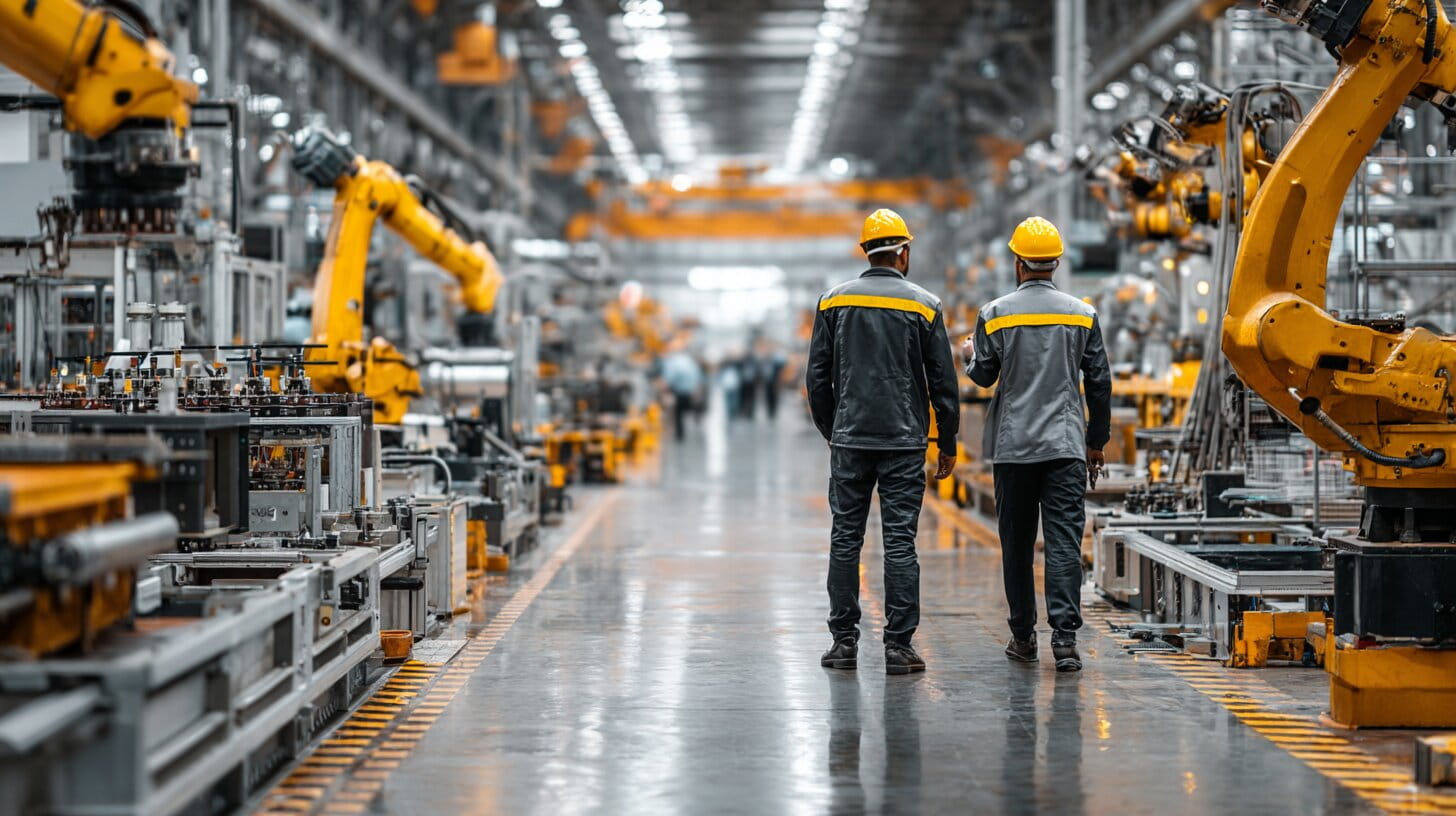
On 4 February 2026, the UK Government published its first Advanced Nuclear Framework UK policy document. This creates a clear pathway for private investment in small modular reactors (SMRs), advanced modular reactors (AMRs), and micro modular reactors (MMRs). For UK manufacturers, this represents one of the most significant industrial opportunities in a generation.
The framework arrives at a pivotal moment. With £17 billion committed to nuclear expansion—the largest government investment since the 1970s—manufacturers who position themselves now will secure contracts worth billions. The nuclear supply chain opportunities are substantial and growing.
What the Advanced Nuclear Framework UK Changes
The framework introduces the UK Advanced Nuclear Pipeline. This is a government-managed process where private developers submit project proposals and receive endorsement. This signals to investors and supply chain partners that the government considers a project credible.
Developers joining the pipeline may access revenue support like Contracts for Difference, risk protections, and engagement with the National Wealth Fund. The Fund brings £27.8 billion of capital, with up to £36.6 billion already committed to Sizewell C.
Crucially, the framework emphasises factory-based fabrication rather than site construction. This shift changes where manufacturing jobs are located and how supply chains work.
Factory Built Reactors: A Manufacturing Revolution
Unlike conventional nuclear plants that need decades of on-site construction, SMRs and AMRs use modular, off-site fabrication. Components are made to precise specs, tested in factories, then transported for assembly.
Rolls Royce SMR, chosen for the UK’s first SMR programme at Wylfa in North Wales, states that 90 percent of components will be factory-made. The company estimates 70 percent of the SMR manufacturing UK supply chain could be domestic.
This approach offers clear advantages:
Repeatability and efficiency: Once processes are set for one reactor, later units become cheaper and faster to produce.
Quality control: Factory settings enable tighter tolerances and more consistent quality than site construction.
Regional job creation: Jobs spread across factory locations nationwide rather than one construction site.
Skills transfer: The precision manufacturing needed—welding, machining, quality assurance—aligns with existing aerospace, defence, and heavy engineering expertise.
The Numbers: Jobs and Investment
The scale of nuclear supply chain opportunities is substantial. The Wylfa SMR programme alone will support 8,000 skilled jobs per year across the UK, with 3,000 jobs at peak in North Wales.
X-Energy and Centrica’s fleet of up to 12 AMRs at Hartlepool could create 2,500 jobs. Holtec and EDF are exploring SMR deployment at the former Cottam coal plant in Nottinghamshire.
Across the broader programme, new nuclear coming online in the 2030s will provide around 15 million homes with clean power and create tens of thousands of long-term jobs. This comes as UK vehicle production hits historic lows, making new manufacturing sectors crucial for regional employment.
How Manufacturers Can Enter the Nuclear Supply Chain
Fit For Nuclear (F4N) Certification
The primary route for manufacturers without nuclear experience is the Fit For Nuclear programme. It’s delivered by the Nuclear AMRC in partnership with NucCol.
F4N helps manufacturers benchmark their operations against nuclear standards. This covers quality management, health and safety, skills, and supply chain management. Companies achieving F4N status join a directory used by nuclear primes to find capable UK manufacturers.
The programme suits companies of all sizes, from SMEs to larger firms. It provides a structured pathway to understand gaps and demonstrate readiness.
Understanding Tiered Supply Chain Structures
The nuclear supply chain operates in tiers:
Primes and OEMs: Companies like Rolls Royce SMR, BAE Systems, and EDF that lead major programmes.
Tier 1 suppliers: Major component suppliers contracting directly with primes, providing pressure vessels, heat exchangers, and control systems.
Tier 2 and 3 suppliers: Manufacturers providing sub-components, materials, machined parts, and services.
Most SMEs will initially target tier 2 and 3 positions. As track records develop, progression to tier 1 becomes achievable.
Capabilities in Demand
Based on SMR and AMR design needs, manufacturers with these capabilities are well positioned:
Precision welding and fabrication: Reactor vessels need certified welders and advanced joining techniques including electron beam and automated orbital welding.
Large-scale and precision machining: Components like reactor vessel heads and pump housings need five-axis CNC machining to nuclear tolerances.
Forgings and castings: Heavy forgings for reactor internals and castings for valve bodies are critical items.
Electrical and control systems: Instrumentation, cabling, and control manufacturing for reactor monitoring.
Quality inspection and NDT: Non-destructive testing including ultrasonic, radiographic, and eddy current inspection.
HALEU Fuel: The Advanced Reactor Enabler
Many AMR designs need High Assay Low Enriched Uranium (HALEU), enriched to 10-20 percent uranium-235. Currently, Russia dominates global HALEU supply.
To build sovereign capability, the UK committed £300 million for a domestic HALEU supply chain. This includes £196 million for Urenco to build Europe’s first commercial HALEU facility at Capenhurst in Cheshire by the early 2030s.
This investment creates more supply chain opportunities in fuel fabrication, handling, and transport.
Industrial Decarbonisation and Data Centres
Beyond grid electricity, advanced nuclear offers high-temperature process heat for industry. AMRs can operate at temperatures suitable for hydrogen production, synthetic fuels, and direct heat for glass, ceramics, and chemicals production.
The framework supports co-location of reactors with energy-intensive industry. Data centres, which need continuous power and face rapid demand growth from AI, are a key focus. The Cottam project, where Holtec and EDF plan SMRs alongside on-site data centres, shows this model in action.
For manufacturers facing high electricity costs, proximity to nuclear heat and power could transform cost structures and enable decarbonisation of hard-to-electrify processes.
The National Wealth Fund: Catalytic Investment
The National Wealth Fund, with £27.8 billion of capital, acts as a catalytic investor for qualifying projects. Its strategic plan commits to equity investment in SMR and AMR projects aligned with the Advanced Nuclear Framework UK.
This matters for manufacturers: projects with NWF backing carry reduced risk, making them more likely to proceed.
Timeline and Next Steps
The framework allows pipeline applications from March 2026. Projects meeting criteria may receive ministerial endorsement, unlocking government support.
Key milestones for manufacturers:
2026: Pipeline applications open; Wylfa SMR final investment decision expected around 2029.
Early 2030s: First SMRs expected at Wylfa; HALEU capability operational at Capenhurst.
Mid 2030s: First AMRs potentially operational at Hartlepool.
Manufacturers should begin positioning now. The lead time to achieve F4N certification and establish relationships with primes typically spans 12 to 24 months.
Practical Actions for Manufacturers
-
Assess your capabilities: Review your precision manufacturing, welding, and quality assurance against nuclear requirements.
-
Engage with F4N: Register with Fit For Nuclear to benchmark readiness and identify improvements.
-
Invest in skills: Nuclear manufacturing requires specific competencies. Training is available through the Nuclear Skills Passport.
-
Attend industry events: The Nuclear Industry Association and Nuclear AMRC run supply chain events where primes present requirements.
-
Consider certification: ISO 9001 is baseline; ISO 19443 (nuclear quality management) shows commitment.
-
Monitor contract opportunities: Track procurement from Rolls Royce SMR and EDF via Contracts Finder.
The Advanced Nuclear Framework UK creates a clear pathway for world-leading SMR manufacturing UK capability. For manufacturers investing in readiness now, the rewards could be substantial.
The Strategic Opportunity
The UK’s nuclear ambitions extend beyond domestic deployment. Rolls Royce SMR has signed agreements for Czech Republic deployment, and export opportunities across Europe are expanding.
Manufacturers establishing themselves in the UK nuclear supply chain now will be positioned for a growing global market. With COP28 commitments to triple global nuclear capacity by 2050, demand for modular reactor components will scale internationally.
For SMEs navigating current trade tariff challenges, the domestic nuclear supply chain offers a growth opportunity less exposed to international trade friction.
The Advanced Nuclear Framework UK is not just energy policy—it’s industrial strategy. UK manufacturers have a window to join a sector that will shape manufacturing, skills, and regional economies for the next half century.
Continue the conversation in the LeanIQ Hub
A unified intelligence platform for UK manufacturing and industrial professionals. From aerospace to automotive, supply chain to skills: curated news, verified peer discussion, and supplier discovery in one place.
Start Exploring