Rolls-Royce Wins Major Delta Airlines Engine Deal: What It Means for UK Aerospace
Delta Air Lines has placed a major order for 62 Rolls-Royce Trent engines to power 31 new Airbus widebody aircraft, with deliveries from 2029. It is the latest signal that UK aerospace manufacturing is in a position of genuine strength, but a critical decision on UltraFan could determine whether that advantage endures.
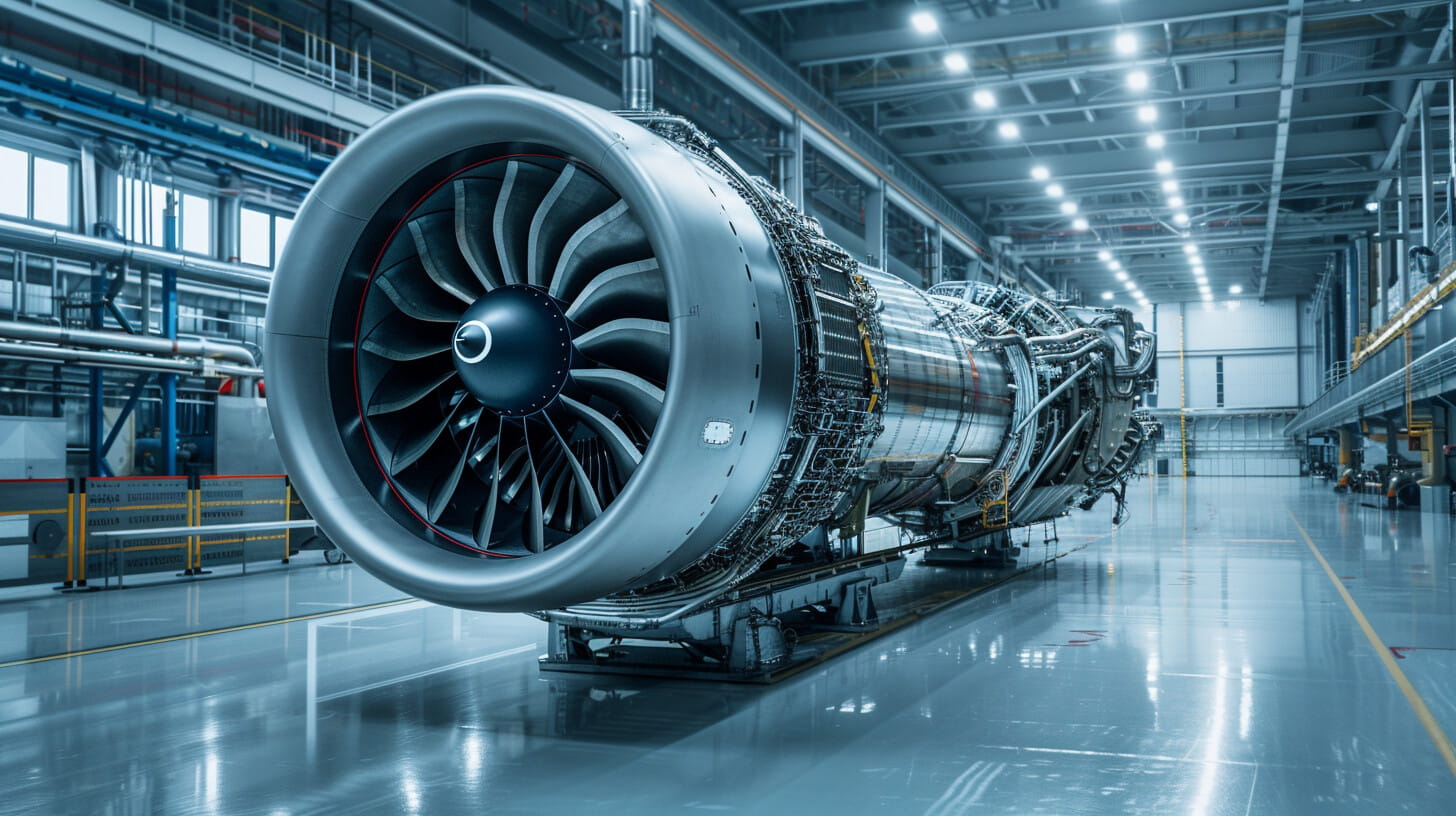
On 28 January 2026, Rolls-Royce confirmed one of the most significant civil aerospace orders in recent years. Delta Air Lines, already Rolls-Royce’s largest partner in the Americas, has committed to 31 Airbus widebody aircraft powered exclusively by Trent engines, backed by long-term TotalCare maintenance agreements. The deal encompasses 62 engines across two Trent variants, with options for a further 20 widebody aircraft that could extend the order substantially.
For UK aerospace manufacturing, this is more than a contract win. It is a vote of confidence in the industrial base centred on Derby and the Midlands, in the Trent engine family that remains the backbone of Rolls-Royce’s civil business, and in a service model that is transforming how airlines and engine makers do business together.
The Deal: 62 Engines Powering Delta’s Widebody Expansion
What Delta Ordered
The order covers two aircraft types: 16 Airbus A330-900neos and 15 Airbus A350-900s. Together, these 31 widebody aircraft will be powered by 32 Trent 7000 engines (for the A330-900) and 30 Trent XWB-84 EP engines (for the A350-900). Delta has also secured options on 20 additional widebody aircraft, which would add further engines to the total if exercised. Deliveries are scheduled to begin in 2029.
Critically, every engine in this order comes with a TotalCare service agreement, Rolls-Royce’s signature maintenance model that transfers time-on-wing and maintenance cost risk back to the engine manufacturer. This is not simply a hardware sale: it is a multi-decade commitment that will generate recurring revenue for Rolls-Royce long after the engines leave Derby.
Why This Deal Matters for Rolls-Royce
Delta is not a new Rolls-Royce customer. The airline already operates 40 Trent XWB-84 powered A350-900s, 39 Trent 7000 powered A330neos, and 80 BR715 powered Boeing 717s. It also has 20 Trent XWB-97 powered A350-1000s on order. This latest commitment deepens an already substantial relationship and cements Delta’s position as the single most important airline partner for Rolls-Royce in the Americas.
Rob Watson, President of Civil Aerospace at Rolls-Royce, put it directly: “Rolls-Royce is proud to have Delta Air Lines as our largest partner in the Americas, and we look forward to continuing to grow the fleet with their selection of more A330-900neos powered by the Trent 7000 and A350-900s powered by the Trent XWB-84 EP, all supported by our unparalleled TotalCare services offering.”
From Delta’s perspective, the decision was driven by operational performance. John Laughter, EVP and Chief of Operations at Delta TechOps, stated: “The Trent XWB-84 has been a highly reliable engine in our fleet, powering millions of journeys on Delta Air Lines aircraft. The improved fuel burn and class-leading durability of the Trent XWB-84 EP have been important factors in our decision to grow our long-haul network with the A350-900.”
The Engines: Trent XWB-84 EP and Trent 7000 Explained
Trent XWB-84 EP: Enhanced Performance
The Trent XWB-84 EP is the latest evolution of what Rolls-Royce describes as the world’s most efficient large aero-engine in service. The EP (Enhanced Performance) variant delivers a 1% fuel burn improvement over the standard XWB-84. A figure that sounds modest in isolation but translates to approximately $5 million in annual fuel savings across a fleet of 20 aircraft. The commensurate reduction in CO2 emissions is equally significant as airlines face growing pressure from both regulators and passengers to decarbonise.
The improvement is achieved without compromising the durability and reliability that made the original XWB-84 a commercial success. For an airline operating long-haul routes, where engine reliability directly affects schedule integrity and passenger experience, that balance between efficiency and dependability is the critical equation.
Trent 7000: The A330neo Workhorse
The Trent 7000 is the exclusive engine for the Airbus A330neo, and its track record is now substantial. The engine has logged over 4 million flying hours globally, with Delta alone accounting for 1 million of those hours. Against the previous generation, the Trent 7000 delivers a 25% reduction in fuel burn, CO2 emissions, and operating costs, whilst providing a range of up to 8,100 nautical miles. For airlines seeking widebody capability on medium-to-long-haul routes without the operating cost of larger twin-aisle aircraft, it is a compelling proposition.
TotalCare: The Service Model That Locks In Revenue
The inclusion of TotalCare agreements across the entire order underscores a shift in the economics of the aero-engine business. Under TotalCare, Rolls-Royce assumes responsibility for engine maintenance, repair, and overhaul throughout the engine’s operational life. The airline pays a fixed rate per flying hour, gaining cost predictability. Rolls-Royce, in return, gains a long-term revenue stream worth multiples of the initial engine sale price.
The model is underpinned by advanced engine health monitoring systems that allow Rolls-Royce to track engine performance in real time, anticipate maintenance needs, and optimise time on wing. For Rolls-Royce, each TotalCare contract effectively converts a one-off sale into a decades-long annuity. For the UK supply chain, it means sustained demand for MRO (maintenance, repair, and overhaul) capabilities, including precision machining, advanced coatings, specialist inspection, and component manufacturing, for the operational life of the engine.
Strategic Implications for UK Aerospace Manufacturing
Rolls-Royce’s Financial Turnaround
This deal arrives at a moment of considerable momentum for Rolls-Royce. The company’s 2024 full-year results showed underlying revenue of £17.8 billion, up 16% from 2023. Civil Aerospace, the division responsible for the Trent engine family, generated £9 billion in revenue, up 24% year-on-year, with gross profit of £2 billion (up 44%). Group underlying operating profit reached £2.5 billion, a 57% increase, with an operating margin of 13.8%.
These are not the numbers of a company in recovery. They are the numbers of a business that has fundamentally reset its cost base and is now capitalising on the post-pandemic surge in long-haul air travel. The Delta order adds further visibility to the forward revenue pipeline, particularly given the TotalCare component that extends income well beyond the initial delivery window.
The UltraFan Question: Will the Next Generation Stay in the UK?
Beneath the headline of the Delta deal lies a question that will define UK aerospace manufacturing for a generation: where will Rolls-Royce build UltraFan?
UltraFan is Rolls-Royce’s next-generation engine architecture, designed to deliver 25% greater fuel efficiency than the first-generation Trent, 40% less NOx emissions, and 35% less noise. The UK Government’s Industrial Strategy has described the UltraFan production decision as “the single biggest opportunity in aerospace over the next 50 years.” The numbers support that assessment: a UK-based UltraFan programme could create 40,000 jobs across the domestic supply chain.
But the decision is far from settled. Politicians in Berlin and Washington are actively courting Rolls-Royce, and the company has been candid about the factors that will determine the manufacturing location. High UK energy costs are cited as a competitive disadvantage. Financial backing from government, in the form of investment support, infrastructure commitment, and long-term policy certainty, is expected to influence the final decision.
The Delta order strengthens the commercial case for UltraFan by demonstrating sustained airline demand for Rolls-Royce widebody engines. But commercial demand alone will not determine where those engines are built. That is a question of industrial policy, energy pricing, skills investment, and political will.
What This Means for the UK Supply Chain
Derby and the Midlands Aerospace Cluster
Rolls-Royce’s headquarters and primary civil aerospace operations are based in Derby, with approximately two-thirds of the jobs created by the company located in the surrounding area. The Midlands Aerospace Alliance coordinates a broader ecosystem of suppliers, many of whom depend on Trent engine production for a significant portion of their revenue.
A 62-engine order of this nature sends work cascading through the supply chain. Over 1,000 UK suppliers, spanning precision machining, composite manufacturing, electronics, testing, and specialist coatings, contribute to the Trent programme. Each engine is assembled from thousands of components, many of which are manufactured by SMEs operating across the Midlands, the North West, and beyond. The ripple effect is substantial: for every job directly created by Rolls-Royce, multiple roles are sustained in the supply chain.
Skills and Workforce Implications
Sustained order intake of this scale drives demand for precision engineers, composite specialists, data analysts, and digital engineers. The aerospace sector is already competing for talent against automotive, defence, and energy industries, all of which are investing heavily in advanced manufacturing capabilities.
Apprenticeship and graduate pipelines remain critical. Rolls-Royce operates one of the UK’s largest engineering apprenticeship programmes, but the broader challenge is systemic: the UK needs to produce more skilled engineers and technicians across the board if it is to retain its position in the global aerospace manufacturing hierarchy. Competition from the US and Germany, both of which are making significant investments in workforce development, is intensifying.
The Bigger Picture: UK Aerospace in 2026 and Beyond
Aerospace is one of the UK’s crown jewel industries. The country is home to the world’s second-largest aerospace sector by revenue, behind only the United States. But that position is not guaranteed. Global air travel has recovered to pre-pandemic levels, driving civil aerospace demand to historic highs. Yet the UK’s share of the global aero-engine market is under pressure from competitors with lower energy costs, more aggressive industrial policy, and growing technical capability.
The Rolls-Royce and Delta deal is a tangible demonstration of what UK aerospace manufacturing can deliver: world-leading engine technology, a proven service model, and the industrial capability to support it. But it also highlights the vulnerability. The TotalCare contracts that make this deal so valuable depend on a UK-based MRO capability. The UltraFan decision will determine whether the next generation of engines is designed and built in Derby or elsewhere.
Government investment through the Aerospace Technology Institute, defence commitments including the Global Combat Air Programme (GCAP) and AUKUS, and the broader Industrial Strategy all contribute to the environment in which decisions like UltraFan will be made. The question is whether the collective weight of these commitments, combined with commercial successes like the Delta order, will be sufficient to keep the UK at the centre of global aerospace manufacturing.
For now, the Delta deal is unambiguously good news. Sixty-two engines, decades of TotalCare revenue, and a deepening relationship with one of the world’s largest airlines. The challenge for UK policymakers and industry leaders is to ensure that news like this remains the norm rather than the exception.
Continue the conversation in the LeanIQ Hub
LeanIQ is a unified intelligence platform for UK manufacturing and industrial professionals. From aerospace to automotive, supply chain to skills: curated news, verified peer discussion, and supplier discovery in one place.
Start exploring the hub and see what operators across sectors are discussing now.
Related Reading
Continue the conversation in the LeanIQ Hub
A unified intelligence platform for UK manufacturing and industrial professionals. From aerospace to automotive, supply chain to skills: curated news, verified peer discussion, and supplier discovery in one place.
Start Exploring