Next Generation Manufacturing UK: What It Means for Business
At the Make UK National Manufacturing Conference this week, Business Secretary Peter Kyle laid out what he called a "strategic imperative" for British industry: the transition to [next generation manufacturing UK](https://leaniq.io/blog/next-generation-manufacturing-uk-strategic-blueprint). For operations directors and manufacturing leaders watching global competitors race ahead in automation and digital adoption, the speech offered both a challenge and a roadmap.
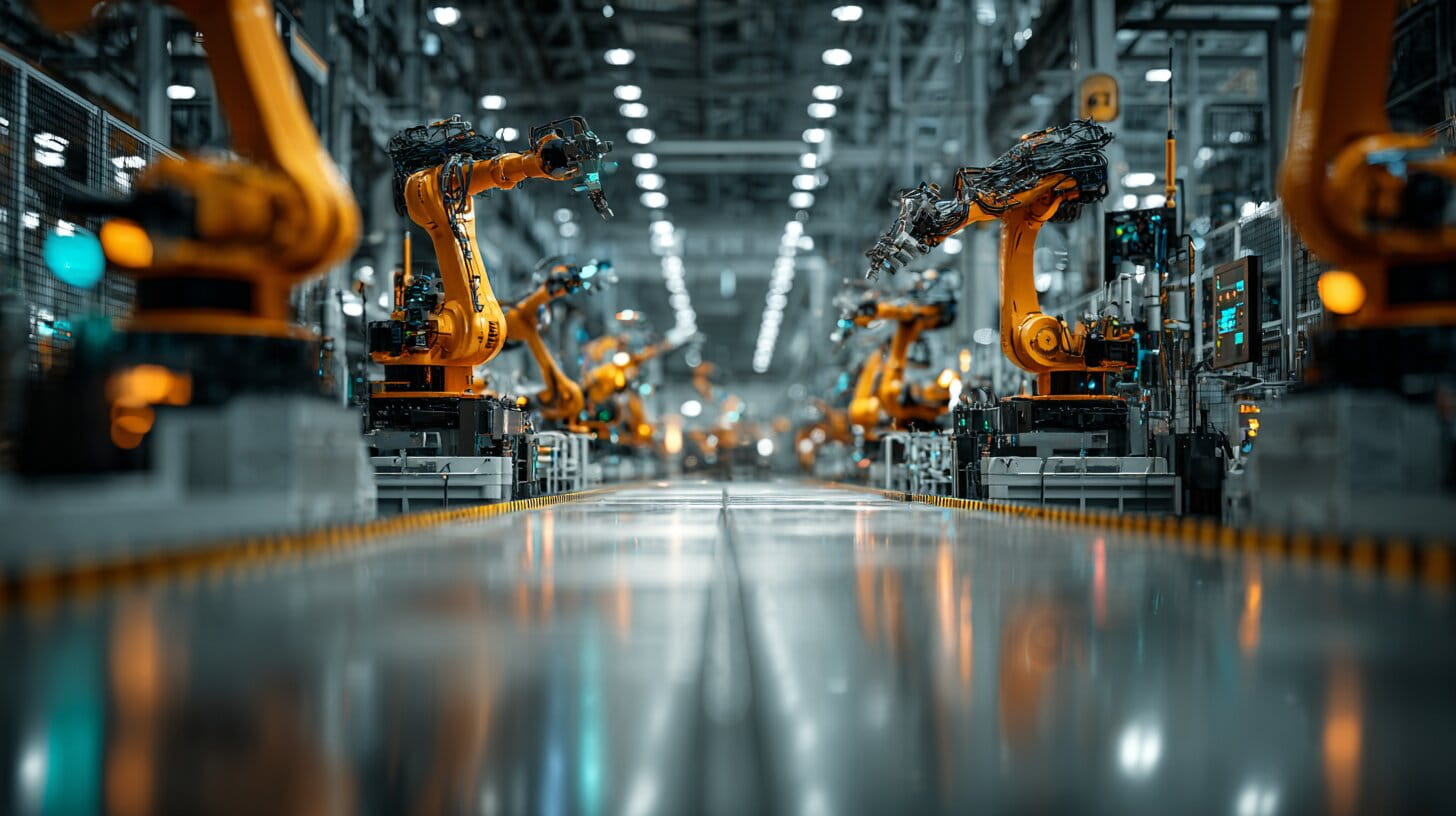
At the Make UK National Manufacturing Conference this week, Business Secretary Peter Kyle laid out what he called a “strategic imperative” for British industry: the transition to next generation manufacturing UK. For operations directors and manufacturing leaders watching global competitors race ahead in automation and digital adoption, the speech offered both a challenge and a roadmap.
But what does next generation manufacturing UK actually mean in practice? And more importantly, what should you be doing about it now?
The Three Pillars: Conception, Production, Utilisation
Kyle structured his vision around three connected phases that deserve careful attention from anyone running a manufacturing operation.
Conception: Where Value Is Really Captured
The first pillar focuses on how products are designed. As Kyle put it: “In the next generation economy, value is increasingly captured at the design stage.”
This is not abstract theory. Rolls-Royce already pioneers digital twin technology in aerospace engine design. They create complete virtual replicas of physical engines that process real-time data from in-service units. These digital twins enable predictive maintenance, extend service intervals, and reduce the manufacturing carbon footprint by catching problems in simulation before they reach production.
BAE Systems integrates advanced modelling and AI into defence platforms. Universities from Cambridge to Manchester produce cutting-edge research that could reshape entire industries.
The practical implication? The factory of the future begins on a high-performance computer, not on the shop floor. Manufacturers who are not investing in simulation, digital engineering, and AI-assisted design are losing competitive advantage before production even starts.
Production: The Automation Gap Britain Must Close
The second pillar addresses how things are made. Here the UK faces uncomfortable truths about smart manufacturing UK adoption.
With just 119 robots per 10,000 manufacturing employees, Britain has the lowest robotics adoption rate in the G7. We trail not only traditional competitors like Germany and Japan but also emerging economies including Mexico and Turkey. While Asia installs 73% of new industrial robots globally, the UK’s modest 3% growth rate signals concerning trends.
The National Robotarium calculates that increasing manufacturing’s GDP contribution from 10% to 15% would add £142 billion to the economy. But achieving this requires modernising production capabilities, particularly in robotics and automation.
The government’s response centres on programmes like Made Smarter. This helps SMEs adopt robotics, AI, 3D printing, and other emerging technologies. The numbers tell an encouraging story: over three years (FY2022/23 to FY2024/25), the programme has engaged with 3,236 businesses across England. It provided 1,607 digital roadmaps and supported 559 grant-funded technology projects worth £7.82 million in direct funding and £16.61 million in matched business investment.
Research from Cambridge Industrial Innovation Policy found that 97% of firms that adopted digital technologies through Made Smarter reported benefits. These include improved production efficiency, better planning, and reduced costs.
The UK’s Surprising AI Leadership
Despite the robotics gap, recent data reveals the UK is actually leading Europe in one critical area: AI manufacturing adoption on the factory floor.
According to Rockwell Automation’s 2025 State of Smart Manufacturing Report, 53% of UK manufacturers already implement machine learning or AI in production. This compares to a global average of 41%. A striking 98% are either using or planning to use generative AI.
Digital twin adoption has jumped from 21% to 37% in just 12 months. The UK reports the highest planned adoption rate in Europe.
Where is AI being deployed? Quality control leads the way. Half of manufacturers plan AI-driven QA within the next year. Cybersecurity is another major application, with 97% of UK firms investing in cyber platforms and 21% citing it as their top ROI driver. Labour shortage mitigation accounts for 41% of AI deployments.
One automotive parts manufacturer implemented AI-driven sensors on assembly lines. These flagged machine wear patterns weeks before failures occurred, reducing unexpected downtime by 30%. Another reduced defects by 90% and saved £2 million annually within eight months using computer vision-based quality control.
Phil Hadfield, Managing Director at Rockwell Automation, observed: “AI is no longer just an emerging trend for UK manufacturers. It has become the driving force behind their transformation.”
Utilisation: The Services Revolution
Kyle’s third pillar addresses how products are sold. It reflects a fundamental shift in manufacturing business models.
“Manufacturing in the 21st century is not just about exporting goods,” Kyle stated. “It is about exporting targeted solutions and integrated solutions.”
The shift from products to services is already well underway. An aircraft engine today is not sold as hardware but as “power by the hour”. This service model monitors performance digitally and predicts maintenance rather than reacting to problems. This combination of advanced engineering and digital service provision is where margins are won.
The broader evidence supports this evolution. A government-commissioned Cambridge report published last month found that manufacturing, when measured including its wider value chain, contributed an estimated £331 billion to the UK economy in 2022. It supported around 4.3 million jobs. This is much higher than traditional statistics suggest. The reason is the growing integration of services within manufacturing activities.
The Skills Crisis: Manufacturing’s Existential Threat
No discussion of next generation manufacturing UK is complete without addressing the manufacturing skills shortage UK that could derail everything.
A quarter of the manufacturing workforce is expected to retire within a decade. In some areas, 50% of vacancies remain unfilled. UK manufacturing apprenticeship starts rose just 0.6% to 46,070 last year, while the skills gap continues widening.
Perhaps most concerning: a Nestlé study of 2,000 young people aged 16-24 found that just 4% would consider a career in manufacturing. The £518 billion sector remains largely invisible to the generation that should fill its future workforce.
“Young people today are confident, creative problem solvers and full of potential,” said Richard Watson, CEO of Nestlé UK and Ireland. “They have the skills that modern manufacturing needs, but there’s a perception gap we need to close.”
Kyle acknowledged this directly: “We cannot automate our way to prosperity if we neglect skills. The engineer of the future must be as comfortable with AI as with machinery, as fluent in data as in design.”
The government has pledged over £1 billion in tailored sector skills packages. It is rolling out short courses funded through the Growth and Skills Levy from April. The Advanced Manufacturing Upskilling and Reskilling Programme aims to create a pipeline for pivotal industries.
But Make UK CEO Stephen Phipson was blunt at the conference: “Currently, there is more than £1 billion of revenue raised from businesses for skills which is not being used to support employer investment in training. This effectively hits business with an extra tax.”
With manufacturing apprenticeship starts down 40% over the past decade and nearly one million young people not in education, employment, or training, Phipson warned of “condemning a generation of young people, which we cannot allow to happen.”
Energy: The Existential Threat
The other major barrier to next generation manufacturing investment is energy costs. UK industrial electricity prices remain about 125% above the EU median. This competitive disadvantage undermines the business case for automation and reshoring.
Phipson called energy costs “an existential threat to the future of the sector”. He described current government support as “the equivalent of taking a peashooter to a gunfight.” The proposed British Industrial Competitiveness Scheme, not scheduled until 2027, is seen by industry as too little, too late.
Manufacturers at the conference consistently cited spiralling electricity costs as barriers to both productivity and decarbonisation. Until the UK’s industrial energy costs come down and grid access becomes faster and more reliable, the transition to next generation manufacturing will be constrained.
Practical Steps for Manufacturing Leaders
Based on government priorities and industry evidence, manufacturers should take concrete action across several fronts:
Assess your digital maturity. The Made Smarter Adoption programme offers free digital roadmapping for SMEs. If you have not engaged with your regional Made Smarter hub, this is low-hanging fruit. The programme now covers the North West, West Midlands, Yorkshire and Humber, North East, and East Midlands, with further expansion planned.
Prioritise AI for quality control. This is where AI manufacturing adoption delivers fastest ROI. Computer vision for defect detection, predictive maintenance using sensor data, and AI-driven production planning all deliver measurable returns. Many see payback within 12 months.
Evaluate your workforce pipeline. With 18% of the current manufacturing workforce due to retire by 2027, succession planning cannot wait. Consider apprenticeships, but also look at shorter upskilling courses and partnerships with further education colleges. The new Growth and Skills Levy flexibilities may offer opportunities.
Model your energy exposure. With industrial energy costs unlikely to fall much in the near term, understanding your energy intensity per unit of output is essential. This informs both automation investment decisions and the business case for on-site generation.
Think services, not just products. If you are not already bundling data, analytics, or maintenance contracts with your products, examine where margins really sit in your value chain. The shift to service models is not just for aerospace giants.
The Strategic Choice
Kyle concluded his speech with a direct challenge: “The question is not whether this transformation in manufacturing will occur. It is whether Britain will shape it or be shaped by it.”
The evidence suggests UK manufacturers are responding. AI manufacturing adoption leads Europe. Digital twin deployment is accelerating. Programmes like Made Smarter deliver measurable productivity gains.
But the barriers are real: a robotics gap that leaves us trailing emerging economies, a skills pipeline that fails to attract the next generation, and energy costs that undermine the investment case for smart manufacturing UK.
The manufacturers who will thrive are those acting now. They invest in conception through digital engineering, modernise production through automation and AI, and maximise utilisation by shifting toward service-based business models.
The government has set out its UK industrial strategy manufacturing vision. The question for every manufacturing leader is whether your business will be part of shaping the future or will be shaped by it.
Key Takeaways
- AI adoption: 53% of UK manufacturers already use AI on the factory floor, leading Europe
- Digital twins: Adoption jumped from 21% to 37% in 12 months
- Robotics gap: UK has just 119 robots per 10,000 workers, lowest in G7
- Skills crisis: 25% of workforce retiring within a decade; only 4% of young people would consider manufacturing
- Made Smarter: 97% of firms report benefits from digital technology adoption
- Manufacturing contribution: £331 billion to UK economy when value chain is included
Continue the conversation in the LeanIQ Hub
A unified intelligence platform for UK manufacturing and industrial professionals. From aerospace to automotive, supply chain to skills: curated news, verified peer discussion, and supplier discovery in one place.
Start Exploring